
Enterprise buyers are no longer selecting a crypto custodian alone. They are choosing the infrastructure that powers wallets, custody, compliance, payments, trading, settlement, and reporting across their digital asset products.
The right platform can reduce engineering effort, simplify regulatory compliance, accelerate product launches, and eliminate the need to integrate multiple vendors. The wrong choice can lead to fragmented infrastructure, operational complexity, reconciliation issues, and higher implementation costs.
This guide compares the best digital asset infrastructure platforms in 2026, highlights where each provider performs best, and provides a practical framework for evaluating vendors based on business requirements rather than brand recognition.
The best digital asset infrastructure platform depends on the problem you're solving. A fintech launching stablecoin payments has very different requirements from an institution building custody, tokenization, treasury, or trading capabilities.
Before comparing providers, define your use case, target customers, supported jurisdictions, regulatory obligations, and the capabilities you need, whether that's wallets, custody, payments, trading, tokenization, or treasury infrastructure. This helps narrow the shortlist and ensures you're evaluating providers against your business requirements rather than feature lists.
When comparing platforms, focus on the factors that have the greatest impact on implementation and long-term operations:
The comparison below highlights where each platform fits best and the primary capabilities it offers.
Each provider approaches digital asset infrastructure differently. Some specialize in custody or compliance, while others focus on payments, treasury, tokenization, or developer infrastructure. The reviews below explain where each platform performs best, its core capabilities, and the types of organizations it is best suited for.
Also read our blog: Top 5 Benefits of Digital Asset Infrastructure
Digital asset infrastructure combines the technology, custody, wallets, compliance, settlement, liquidity, and reporting systems that enable businesses to build and operate digital asset products securely. Rather than integrating separate providers for each capability, many organizations use infrastructure platforms that provide these services through a unified operating layer.
Core capabilities typically include digital asset custody, wallet management, blockchain connectivity, fiat payment rails, compliance tooling, transaction monitoring, liquidity access, settlement, APIs, and reporting. Together, these components allow businesses to support use cases such as stablecoin payments, crypto trading, tokenization, treasury operations, and embedded wallets while maintaining operational and regulatory controls.
Also read our blog: Digital Asset Infrastructure Strategy: A Step-by-Step Guide
Instead of evaluating vendors purely on features, businesses should assess how well a platform supports their product strategy, regulatory requirements, and operational workflows. The providers below represent some of the leading digital asset infrastructure platforms available today.
Fuze Finance provides a unified platform that enables businesses to launch digital asset products without integrating multiple vendors. Its infrastructure combines wallets, custody, payments, liquidity, compliance, settlement, and APIs, allowing organizations to build and scale digital asset services through a single platform.
The platform supports a wide range of enterprise use cases, including embedded crypto products, stablecoin payments, treasury management, tokenization, OTC trading, and institutional custody. Businesses can integrate these capabilities using APIs while keeping customer experience, product logic, and operational workflows within their own applications.
Fintechs, banks, payment providers, and enterprises looking for an end-to-end digital asset infrastructure platform.
Organizations looking to consolidate custody, payments, liquidity, compliance, and settlement into a single platform can reduce integration complexity while accelerating product launches. Rather than managing multiple infrastructure providers, teams can build on a unified operating layer designed for enterprise-scale digital asset products.
Fireblocks is one of the most widely adopted digital asset infrastructure platforms for institutional custody and secure asset transfers. It uses Multi-Party Computation (MPC) technology to protect private keys while enabling organizations to manage digital assets without relying on a single signing device.
Beyond custody, Fireblocks offers treasury management, payment orchestration, tokenization support, staking, and connectivity to exchanges, banks, custodians, and liquidity providers. Its platform is designed for businesses managing significant digital asset volumes and complex operational workflows.
Financial institutions, exchanges, and enterprises focused on institutional custody and treasury management.
Fireblocks is well suited to organizations that prioritize institutional-grade custody, treasury operations, and secure transaction workflows. Its MPC architecture, extensive ecosystem integrations, and governance controls make it a popular choice for financial institutions managing large digital asset portfolios.
Anchorage Digital is a federally chartered digital asset bank that provides custody, trading, settlement, staking, and financing services for institutional clients. Its regulated status makes it a preferred choice for organizations operating in jurisdictions where regulatory oversight and qualified custody are key requirements.
The platform combines secure custody with trading and settlement capabilities, enabling institutions to manage digital assets within a regulated operating environment. It also supports governance features designed for institutional investment firms, asset managers, and financial institutions.
Institutions that require regulated digital asset custody and banking services.
Anchorage Digital is ideal for organizations that prioritize regulatory compliance alongside institutional custody. Its federally chartered banking model, combined with custody, settlement, and trading services, makes it particularly attractive for banks, asset managers, and institutional investors.
BitGo is one of the longest-established institutional digital asset infrastructure providers, offering custody, wallets, treasury management, settlement, and trading services. It is widely recognized for its multi-signature security model and enterprise-grade custody solutions.
In addition to safeguarding digital assets, BitGo provides infrastructure for asset transfers, portfolio management, settlement, and liquidity, helping institutions manage digital asset operations through a secure and scalable platform.
Enterprises, exchanges, custodians, and financial institutions requiring secure custody and treasury infrastructure.
BitGo is well suited to organizations looking for mature custody infrastructure backed by extensive institutional experience. Its multi-signature security architecture, treasury capabilities, and broad asset support make it a strong choice for businesses managing significant digital asset holdings.
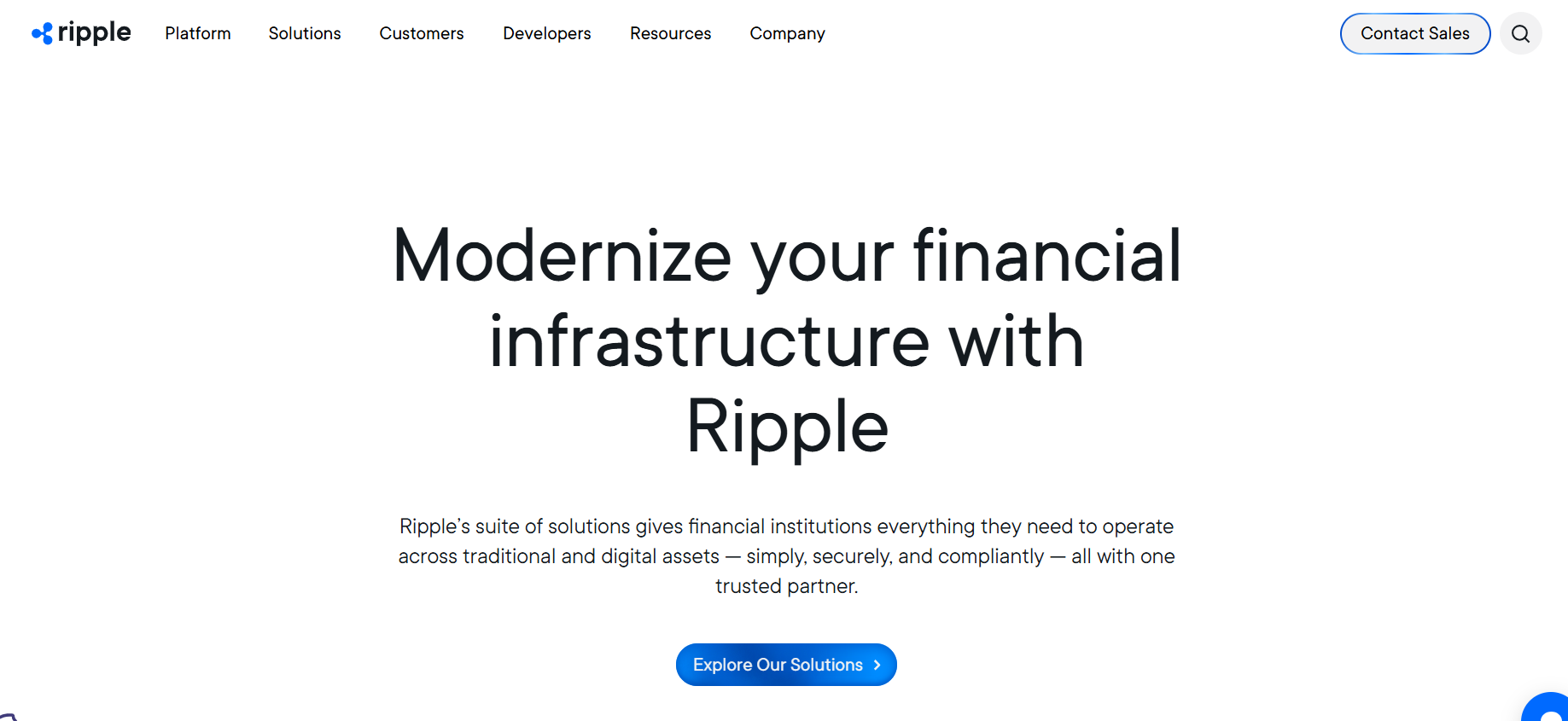
Ripple provides blockchain-based payment infrastructure that enables financial institutions to move money internationally using digital asset technology. Its solutions support cross-border payments, liquidity management, tokenization, stablecoins, and custody services.
Ripple's infrastructure is designed to improve settlement speed, reduce operational complexity, and provide access to global payment corridors. The platform is used by banks, payment providers, and financial institutions looking to modernize international payments while integrating digital assets into existing financial systems.
Financial institutions and payment providers building cross-border payment infrastructure.
Ripple is a strong choice for organizations focused on cross-border payments and institutional settlement. Its combination of payment infrastructure, liquidity solutions, custody, and tokenization capabilities makes it particularly valuable for financial institutions looking to integrate digital assets into international payment workflows.
Before assigning engineering resources, confirm the following across product, compliance, operations, and technology.
Fuze Finance provides an end-to-end digital asset infrastructure platform that brings together wallets, custody, compliance, liquidity, payments, settlement, and enterprise APIs in a single solution. Instead of managing multiple vendors, businesses can launch and scale digital asset products through a unified platform designed for fintechs, financial institutions, payment providers, and enterprises.
Whether you're building stablecoin payment flows, embedded wallets, tokenization platforms, or digital asset treasury operations, Fuze Finance helps reduce integration complexity while providing the infrastructure needed to launch securely and scale confidently.


%201.jpg)