
Choosing an embedded trading platform is about far more than comparing APIs. The provider you choose determines which assets you can offer, how customer accounts are opened, who handles custody and compliance, where you can launch, and how quickly you can bring your product to market.
The market now includes platforms built for very different use cases. Some focus on traditional brokerage infrastructure, while others specialise in crypto trading, stablecoins, brokerage connectivity, or embedded wealth management. As a result, the "best" platform depends less on feature count and more on how well the provider fits your product strategy.
This guide compares various embedded trading platforms across asset coverage, licensing, regional strength, API capabilities, implementation considerations, and ideal use cases. Instead of ranking providers by feature lists alone, we'll help you identify which platform best matches the product you're building.
There is no universally "best" embedded trading platform. The right choice depends on four decisions: which assets you want to offer, where you plan to launch, which regulated responsibilities you want to own, and the customer experience you're building. Choosing the right platform starts with those questions, not with comparing API documentation.
An embedded trading platform is API-first infrastructure that lets a fintech add investment or trading capabilities without building every regulated, operational, and technical layer internally.
It is not just an API to place orders. It is a bundle of workflows that shape onboarding, custody, compliance, execution, settlement, and reporting.
Core capabilities can include:
There are three major categories.
Rather than comparing feature lists alone, we evaluated embedded trading platforms using the criteria that matter most during vendor selection.
Does the platform support the assets your product needs, such as stocks, ETFs, options, crypto, stablecoins, fixed income, or managed portfolios?
Which countries and regulatory jurisdictions are supported today, and where can you realistically launch?
What regulated responsibilities does the provider handle, and which remain with your business?
Who holds customer assets? How are funds settled? What operational model does the provider use?
developer experienceWe assessed API maturity, documentation, sandbox environments, SDKs, webhooks, event handling, and implementation quality.
This includes reporting, statements, tax documents, reconciliation, monitoring, customer support, and implementation assistance.
The following platforms are among the leading embedded trading providers for fintechs. Each serves a different market, asset class, and operating model, so the right choice depends on what you're building.
Choose Fuze Finance when crypto and digital assets are a core part of your product rather than an additional feature.
Fuze is a strong fit for:
Fuze provides API-first infrastructure for embedded crypto trading, combining hosted crypto wallets, fiat accounts, multi-currency ledgers, trading, conversion, and settlement into a single platform. It also supports sandbox environments, developer APIs, and SDKs to simplify integration.
The platform includes institutional liquidity, smart order routing, spot and stablecoin trading, segregated client accounts, post-trade settlement, risk controls, trade approval workflows, and audit-ready reporting.
For businesses handling larger trading volumes, Fuze also offers OTC infrastructure covering customer onboarding, fund custody, fiat and crypto accounts, quote generation, order execution, and settlement.
A typical implementation follows this flow:
Fintech application → Fuze APIs → Customer onboarding → Fiat and crypto accounts → Trading and liquidity → Settlement and reporting
Before selecting Fuze, verify supported jurisdictions, regulatory permissions, custody arrangements, supported assets and blockchain networks, fiat rails, pricing, settlement timelines, and implementation support.
Fuze is particularly well suited for fintechs looking to build a comprehensive digital-asset offering.
Choose Alpaca for developer-led fintech products that want API access to U.S. investing and trading workflows.
Alpaca is a strong fit for API-first brokerage or investing apps. It works well for teams that prioritize documentation, account APIs, market data, event streams, and programmatic trading.
Its Broker API is positioned for businesses embedding stock, options, fixed income, and crypto trading into an investment app. Alpaca describes KYC as a service, account funding, market data, reporting, and real-time updates through Server-Sent Events.
A key diligence point is the difference between Alpaca’s Trading API and Broker API. The Trading API is commonly associated with individual traders and personal apps. The Broker API is for partners building end-customer products on Alpaca infrastructure.
Account-opening documentation shows APIs for opening end-customer accounts and receiving status updates through an Event API stream. That matters for fintechs that need workflow visibility during onboarding.
Validate whether your product needs the Broker API rather than the direct Trading API. Also confirm customer jurisdictions, onboarding obligations, disclosures, funding rails, cash or margin setup, crypto availability, and market-data costs.
For non-U.S. or global fractional investing, compare DriveWealth and Upvest. For active options tooling, compare Tradier as well.
Choose DriveWealth when the product model is global embedded investing with fractional access to U.S. securities and a brokerage-as-a-service operating layer.
DriveWealth is a strong fit for banks, wallets, fintech apps, and wealth platforms launching U.S. investing to customers in multiple markets. It is also relevant for teams that want fractional share workflows, onboarding, account funding, trading, statements, and tax reporting through one platform.
DriveWealth says it pioneered fractional share investing. It also describes trading for U.S. equities, mutual funds, ETFs, fixed income, and options.
Its site positions its APIs as a modern toolkit for investment workflows. Example use cases include roundups into fractional share ownership.
DriveWealth also describes brokerage-as-a-service flows from onboarding and funding through trading, digital statements, and tax reporting. Its customer agreement identifies DriveWealth LLC as a U.S. broker-dealer registered with the SEC and a member of FINRA.
Diligence should cover country coverage, introducing-firm obligations, disclosures, tax reporting, statement branding, custody and clearing model, fractional mechanics, order routing, and implementation timeline.
If the primary need is crypto or stablecoin infrastructure, Fuze may be a better shortlist. If the buyer is Europe or UK-first, compare Upvest.
Choose Apex when the program needs mature U.S. brokerage infrastructure, clearing, custody, wealth-tech integrations, and enterprise-grade operating depth.
Apex is a strong fit for established U.S. wealth platforms, brokerages, advisors, and investing firms. It suits teams that need account opening, investor documents, custody, clearing, integrations, and scalable wealth infrastructure.
Apex’s integration marketplace says AscendOS includes core wealth-technology features from account opening to investor documents. It also allows third-party solutions to connect into the operating model.
Apex describes its integration marketplace as a way to reduce development lift, accelerate deployment timelines, and centralize third-party tools. Its materials identify Apex Clearing Corporation as an SEC-registered broker-dealer, member of FINRA and SIPC, and licensed in 53 states and territories.
The tradeoff is complexity. Apex may be overpowered for lean fintech MVPs that need only a narrow asset class or a fast experiment.
Enterprise buyers should still diligence timelines, minimums, data model, third-party integrations, fixed-income support, operational handoffs, and customer-service responsibilities.
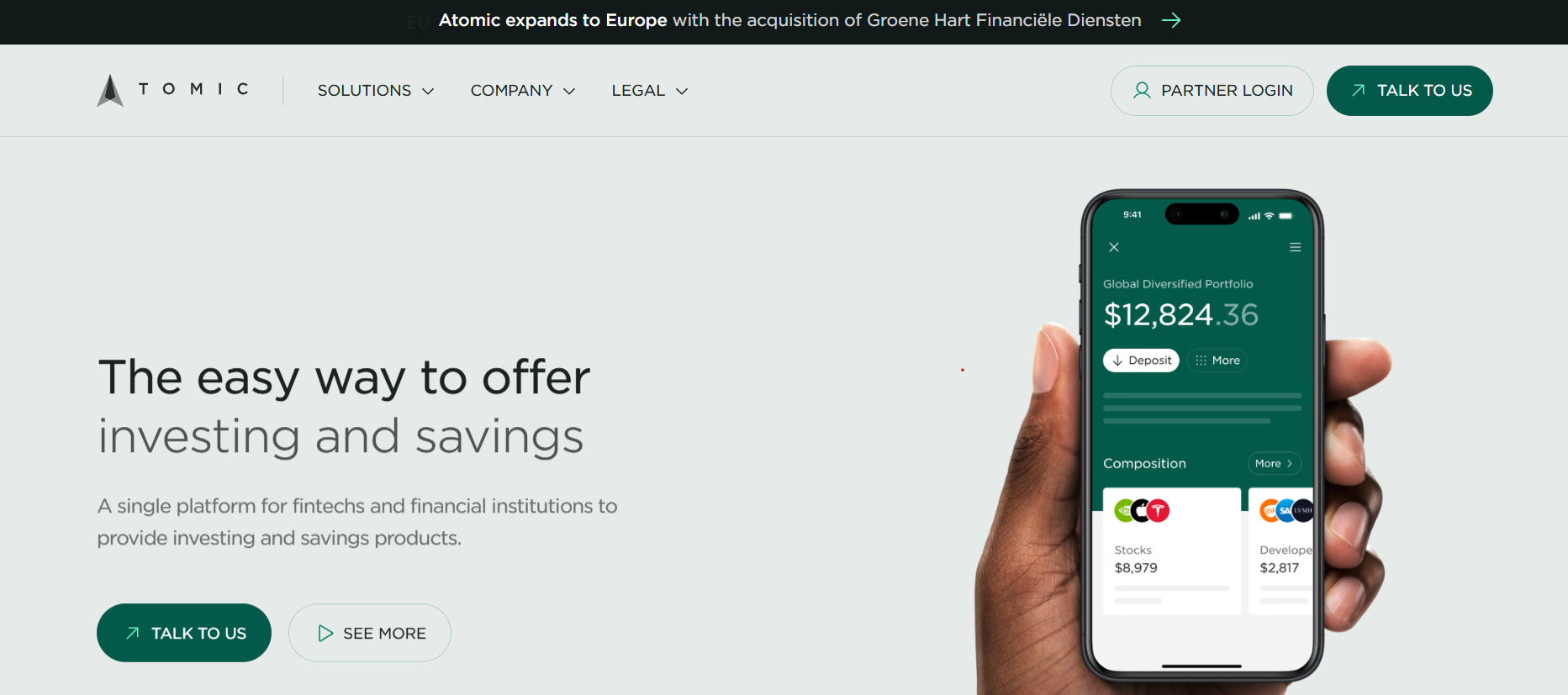
Choose Atomic Invest when the product goal is embedded investing, savings, wealth management, or cash management rather than active self-directed trading.
Atomic is a strong fit for fintechs and financial institutions adding investing and savings products. It also fits apps building guided investing, goal-based savings, managed portfolios, cash management, or yield-oriented experiences.
Atomic describes itself as a single platform for fintechs and financial institutions to provide investing and savings products. Its site highlights wealth management capabilities such as custom indexing and bond laddering.
It also describes cash management accounts with access to FDIC-insured cash sweeps, money market funds, and treasury bills. Atomic disclosures identify Atomic Invest LLC as an SEC-registered investment adviser.
Ask these buyer questions:
Atomic may be the wrong default for an active trading or options platform. In that case, evaluate Alpaca, Tradier, DriveWealth, or Apex depending on region and operating model.
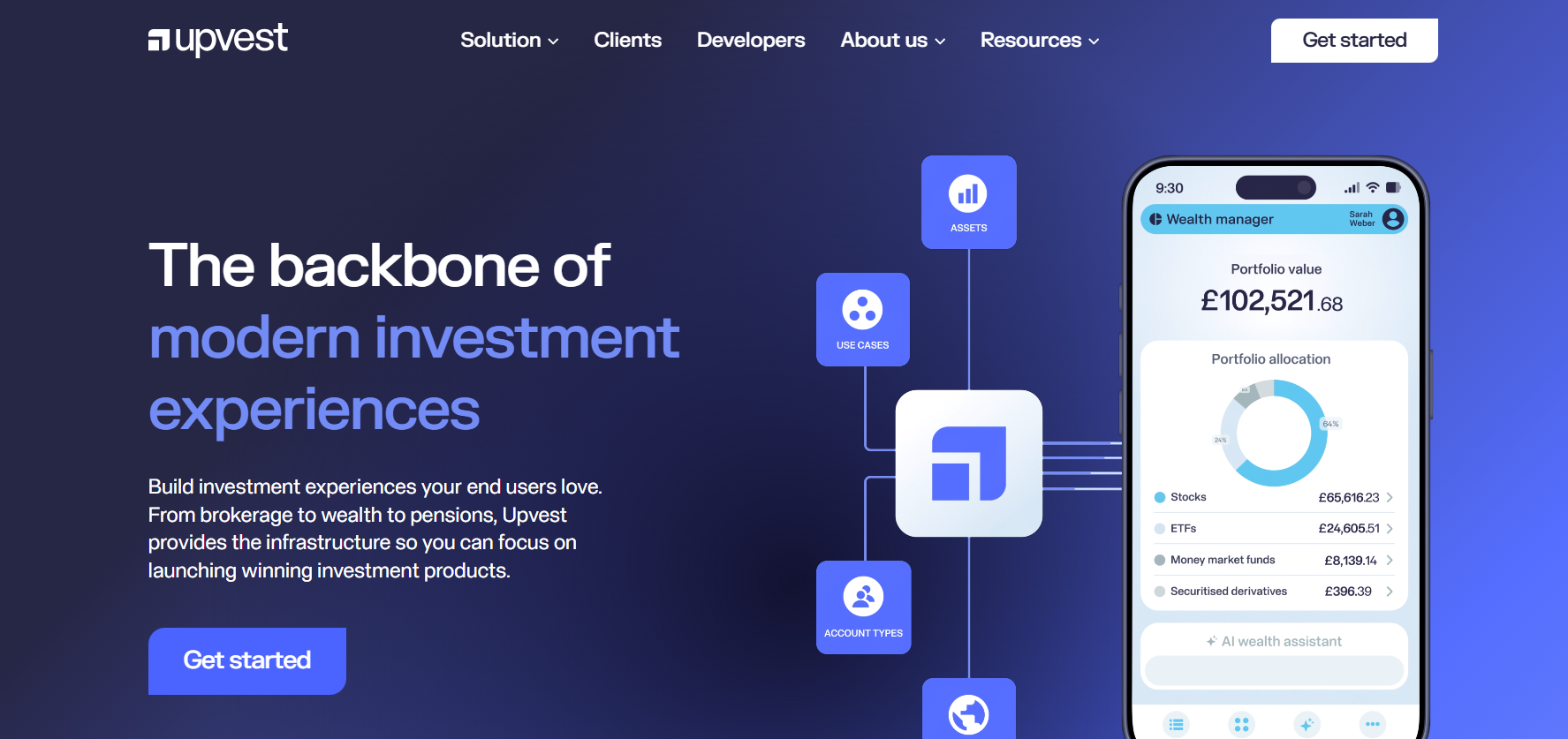
Choose Upvest when the buyer is building regulated embedded investing for Europe or the UK.
Upvest is a strong fit for European and UK fintechs, banks, brokers, and wealth managers. It supports products that need stocks, ETFs, mutual funds, money market funds, ELTIFs, derivatives, bonds, fractional investing, portfolios, savings plans, or roundups.
Upvest says its Investment API can plug into existing infrastructure covering brokerage, settlement, and custody. It also describes BaFin and FCA supervision, custodian capabilities, direct market connectivity, native fractional investing, and compliant launches across Europe and the UK.
Its documentation describes operating models that can include brokerage, settlement, custody, pan-European licenses, and automated operations. Upvest also provides Postman collections, while product docs describe webhooks for savings-plan lifecycle monitoring.
The tradeoff is regional fit. Upvest is compelling for Europe and UK market entry, but it is not usually the default for U.S.-first embedded brokerage programs.
Buyers should diligence take-our-license vs bring-your-own-license, account structure, ISA or local wrapper support, tax reporting, instrument coverage, implementation requirements, and exact country rollout plans.
Use specialist APIs when you do not need a full brokerage stack. This can reduce implementation scope and avoid overbuying infrastructure.
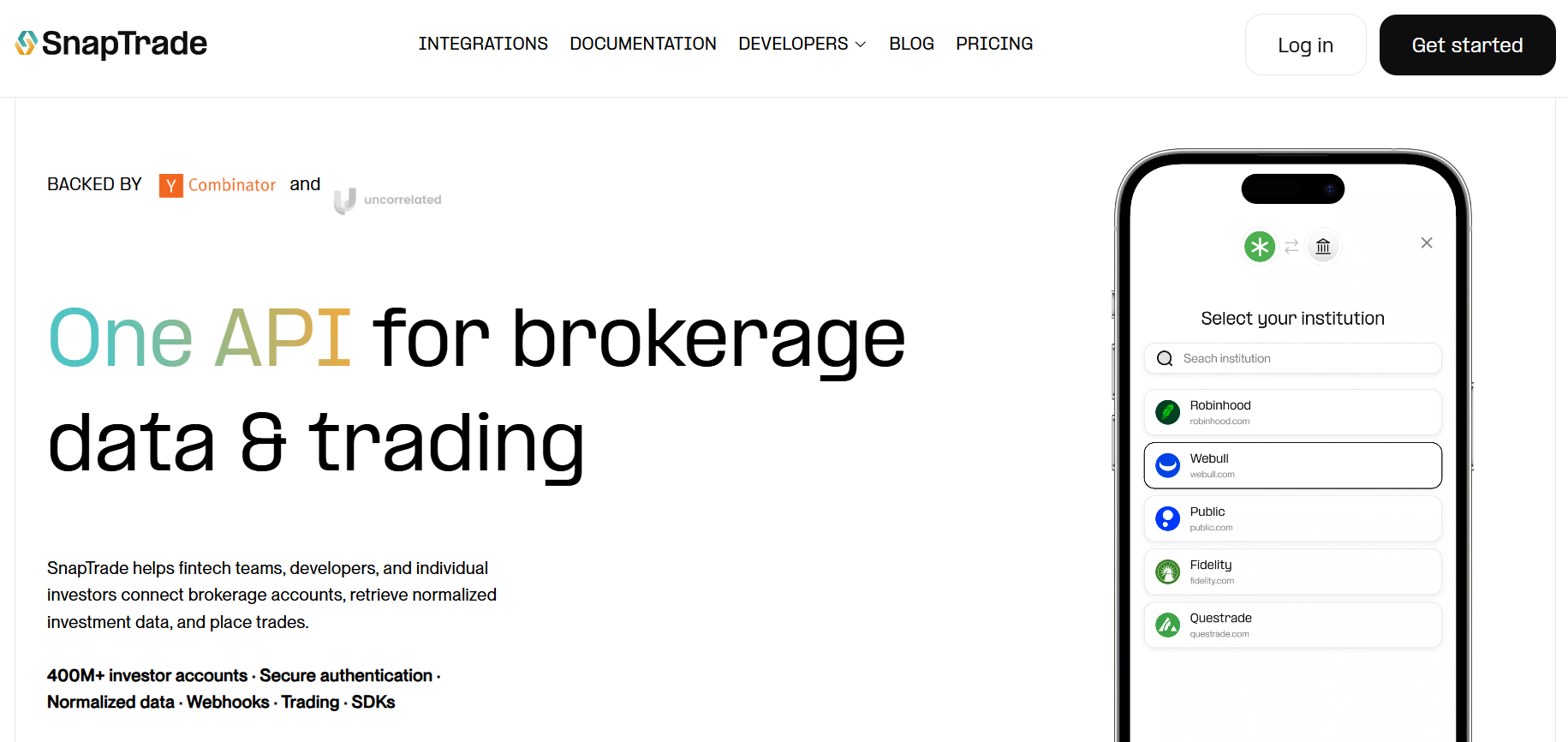
SnapTrade is best for connected brokerage-account trading. Use SnapTrade when users bring existing brokerage accounts and the app needs normalized holdings, balances, orders, activities, and trade placement.
SnapTrade says it connects to major brokerages through a unified API. It also supports authorized trade execution where brokers allow it.
The tradeoff is variability. Availability depends on the connected broker and asset type, so diligence broker coverage and trading permissions.
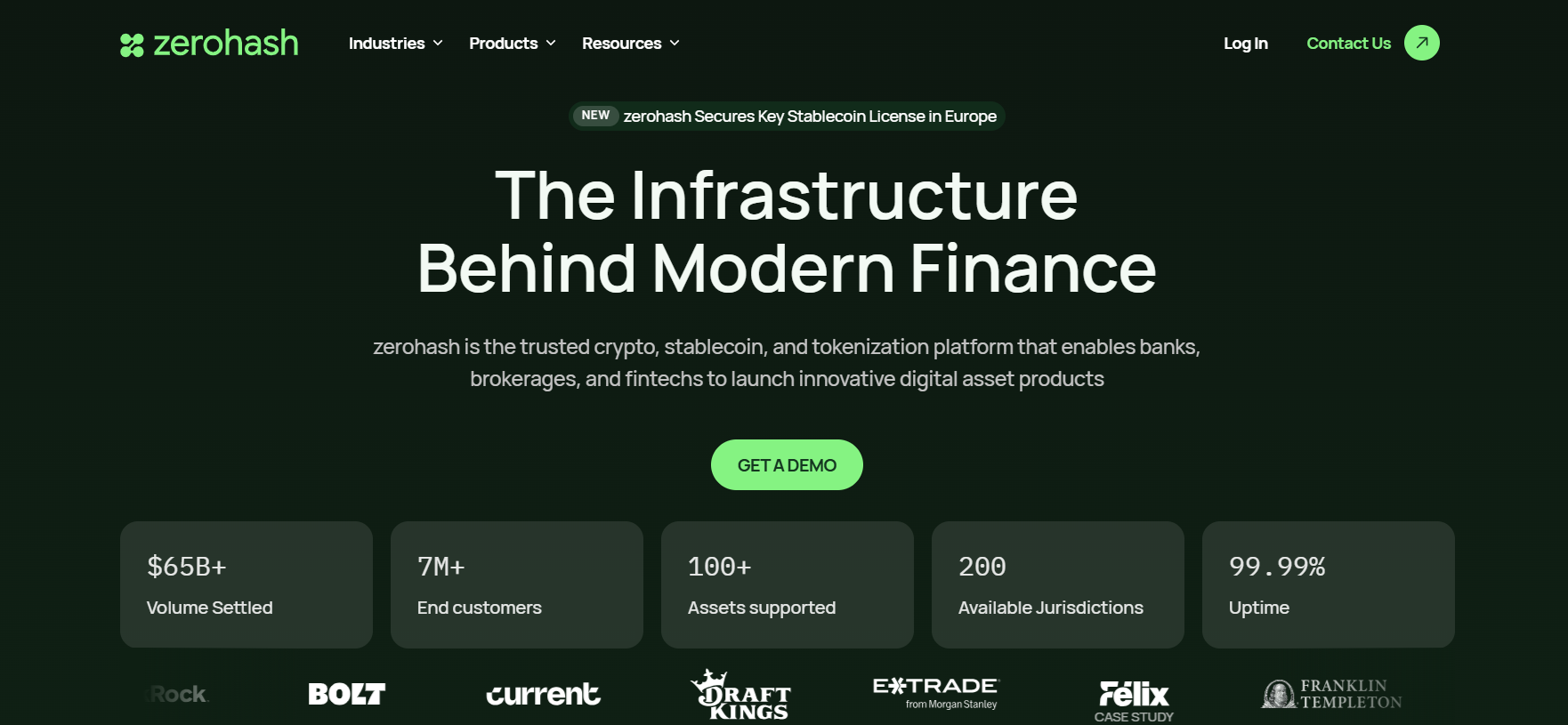
Zero Hash is best for modular crypto-as-a-service. Use Zero Hash when the app needs crypto trading, stablecoin funding, global payouts, settlement, or tokenization APIs.
Zero Hash describes crypto, stablecoin, and tokenization infrastructure. This includes custody, liquidity access, compliance tools, transaction monitoring, settlement, and blockchain connectivity.
Zero Hash is best suited for businesses that need modular crypto infrastructure rather than a full end-to-end trading platform. If your product also requires hosted wallets, fiat accounts, OTC trading, or broader digital-asset operations, evaluate whether additional infrastructure will be needed.
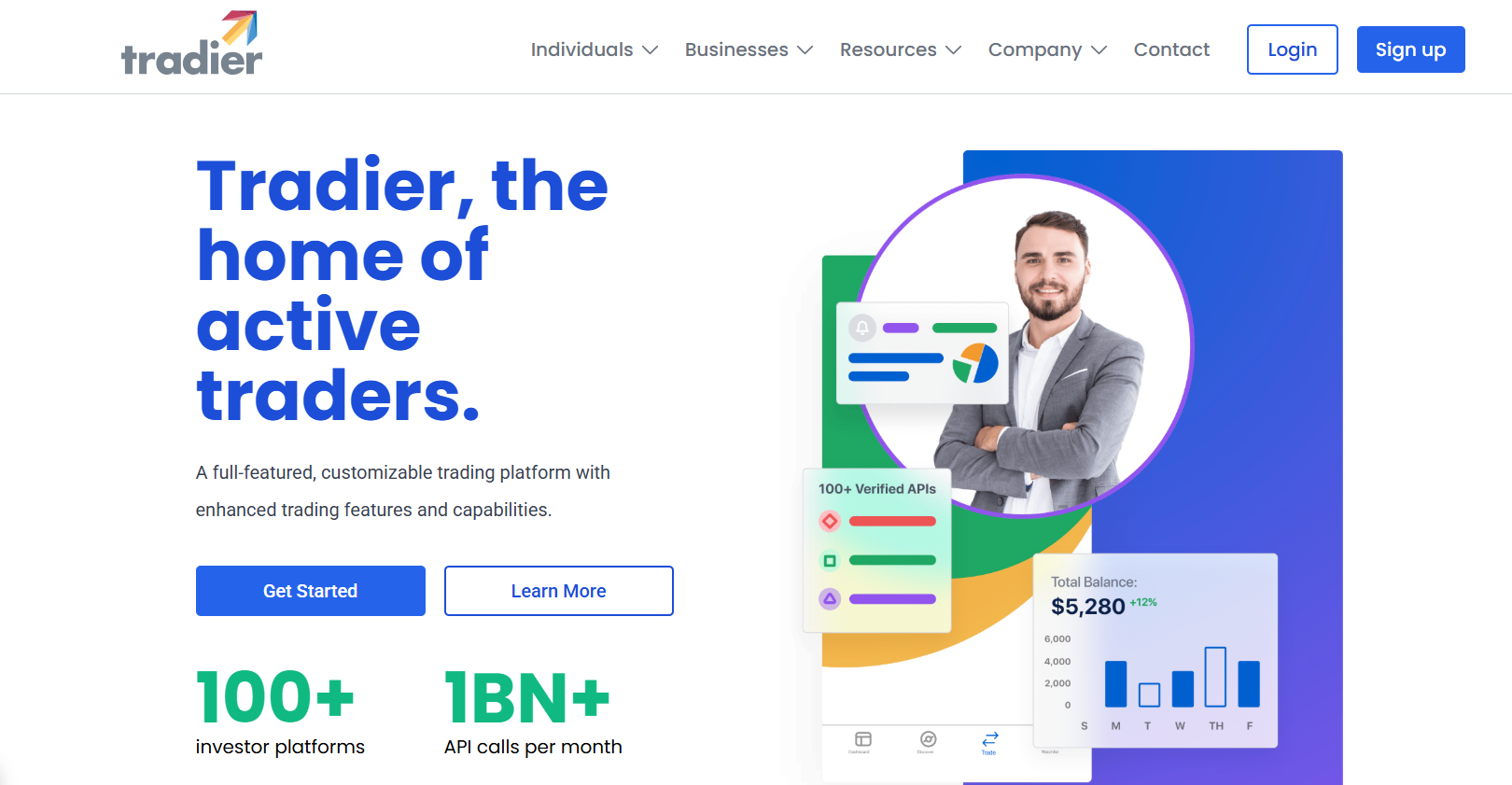
Tradier is best for active trader and options-oriented APIs. Use Tradier when the product is a trading tool, options workflow, or active-trader experience.
Tradier docs describe U.S. equities and options trading, real-time, delayed, and historical market data, streaming interfaces, WebSocket streaming, and paper-money sandbox support.
The tradeoff is scope. Tradier is a trading API and brokerage access layer, not the broadest all-in-one embedded investing infrastructure for global consumer fintech programs.
Specialists are often best when the product model is narrow: connecting existing brokerage accounts, enabling crypto rails, or serving active traders.
Embedded trading selection should start with the product model, not the longest feature list. The wrong platform can create licensing gaps, custody complexity, reporting issues, or a launch timeline that does not match the business plan.
Use Fuze Finance for embedded crypto and digital assets, Alpaca for developer-first U.S. trading apps, DriveWealth for global fractional investing, Apex for mature U.S. wealth infrastructure, Upvest for Europe and UK investing, Atomic for investing and savings, SnapTrade for brokerage connectivity, Zero Hash for modular crypto rails, and Tradier for active trader APIs.
Before signing a vendor contract, finalize your asset class, region, license model, custody model, execution requirements, and launch timeline. That discipline will make the shortlist clearer and reduce costly rework after launch.


%20(1)%20(1).png)