
Every crypto trading platform promises low fees and fast execution, but those features alone don't determine which one is right for you. The real differences lie in liquidity, security, custody, supported assets, regulatory coverage, and how well the platform fits your trading goals.
This guide compares the leading crypto trading platforms in 2026 across fees, execution quality, security, compliance, and trading capabilities to help you make an informed decision.
Here are the best crypto trading platforms in 2026, categorized by the type of user they're best suited for.
Not every crypto trading platform is built for the same type of user. Some prioritise regulatory compliance and custody, while others compete on liquidity, derivatives, APIs, or low trading fees. Comparing platforms solely by headline fees often leads to the wrong decision.
We evaluated each platform across the factors that matter most before choosing where to trade or build.
We looked beyond advertised maker and taker fees to compare the total cost of trading, including spreads, funding costs, fiat deposits and withdrawals, network fees, and volume-based pricing.
Execution quality matters as much as pricing. We considered order-book depth, spread consistency, matching-engine reliability, supported order types, and the ability to execute larger trades with minimal slippage.
We reviewed each platform's custody model, proof-of-reserves disclosures, cold-storage practices, account security features, certifications, and publicly available information about asset protection.
Every platform supports different jurisdictions, licences, and products. We assessed regulatory positioning, supported markets, institutional onboarding, and regional availability to help readers understand where each platform is most suitable.
Trading requirements vary widely between users. We compared support for spot trading, derivatives, staking, APIs, OTC services, institutional accounts, stablecoins, and advanced order types.
For fintechs and businesses, operational capabilities are just as important as trading features. We considered APIs, reporting, accounting exports, treasury workflows, business onboarding, and integration support where relevant.
Before committing significant capital, test the complete workflow, from funding your account to placing trades, withdrawing assets, and exporting reports. Small operational differences often become far more important than minor differences in trading fees.
Here are the best crypto trading platforms in 2026, each selected for a different use case. Rather than ranking them from first to last, we've matched each platform to where it performs best, whether that's retail investing, active trading, institutional execution, or business crypto operations.
Choose Fuze when your business needs to execute large crypto transactions with dedicated execution support rather than through a retail exchange.
Unlike consumer-focused trading platforms, Fuze is built for businesses that require OTC crypto trading alongside broader digital-asset infrastructure. It supports high-value crypto transactions, stablecoin operations, fiat-to-crypto conversion, treasury workflows, and settlement through a regulated infrastructure designed for fintechs, payment providers, remittance companies, banks, and enterprises.
One of Fuze's key differentiators is its OTC desk, which enables businesses to execute large trades with competitive pricing and reduced market impact. Instead of relying on public order books, clients receive dedicated trade execution and settlement support for institutional-sized transactions.
Fuze is particularly well suited to businesses that need regulated digital-asset infrastructure, reliable OTC execution, and enterprise-grade operational support. If your primary requirement is retail trading in stocks or cryptocurrencies, a traditional exchange or brokerage platform may be a better fit.
Takeaway: Choose Fuze Finance when your business needs regulated crypto OTC trading and digital-asset infrastructure rather than a self-service retail trading platform.
Coinbase is one of the strongest choices for users who prioritise regulatory compliance, easy fiat access, and a platform that can scale from retail investing to institutional trading.
It is best suited for U.S.-based investors, businesses, and institutions looking for a trusted platform with broad product coverage, strong reporting capabilities, and established banking relationships.
Coinbase supports spot trading, staking (where available), APIs, institutional custody, derivatives through eligible entities, and its Advanced Trade platform for professional users. Its public fee structure uses maker/taker pricing based on 30-day trading volume, while institutional products such as Coinbase Prime and Exchange support more sophisticated trading workflows.
Before choosing Coinbase, compare Simple Trade and Advanced Trade pricing, review withdrawal costs, verify product availability in your jurisdiction, and confirm whether the institutional products match your operational requirements.
Takeaway: Choose Coinbase if regulated U.S. access, institutional credibility, and reliable fiat on/off ramps matter more than finding the absolute lowest trading fees.
Kraken is a strong choice for traders who value security, transparency, and advanced execution tools without sacrificing usability.
It is particularly well suited for active traders who want professional order types, transparent proof-of-reserves reporting, and a platform with a long-standing reputation for security.
Kraken offers spot trading, margin trading (where supported), futures in eligible jurisdictions, institutional services, and Kraken Pro with advanced order types including trailing stops, iceberg orders, and conditional closes. The platform also publishes proof-of-reserves information and highlights its security certifications and compliance framework.
Before opening an account, verify whether staking, futures, and margin trading are available in your country, and compare Kraken Pro fees with the standard consumer experience.
Takeaway: Choose Kraken when security, execution quality, and professional trading tools are more important than having the largest selection of altcoins.
Binance remains one of the largest global crypto trading platforms, offering deep liquidity, extensive market coverage, and a comprehensive suite of trading products where available.
It is best suited for experienced traders who need access to a wide range of cryptocurrencies, derivatives, APIs, and advanced trading tools.
The platform supports spot trading, futures, margin trading, staking, launchpad products, APIs, institutional services, and a broad range of order types. Its maker/taker pricing is generally competitive, with additional discounts available through higher trading volumes and BNB fee payments.
Before choosing Binance, confirm product availability in your jurisdiction, review local regulatory restrictions, and compare withdrawal costs, supported fiat rails, and reporting capabilities.
Takeaway: Choose Binance if your priority is deep liquidity, broad asset coverage, and advanced trading capabilities in jurisdictions where the platform is fully available.
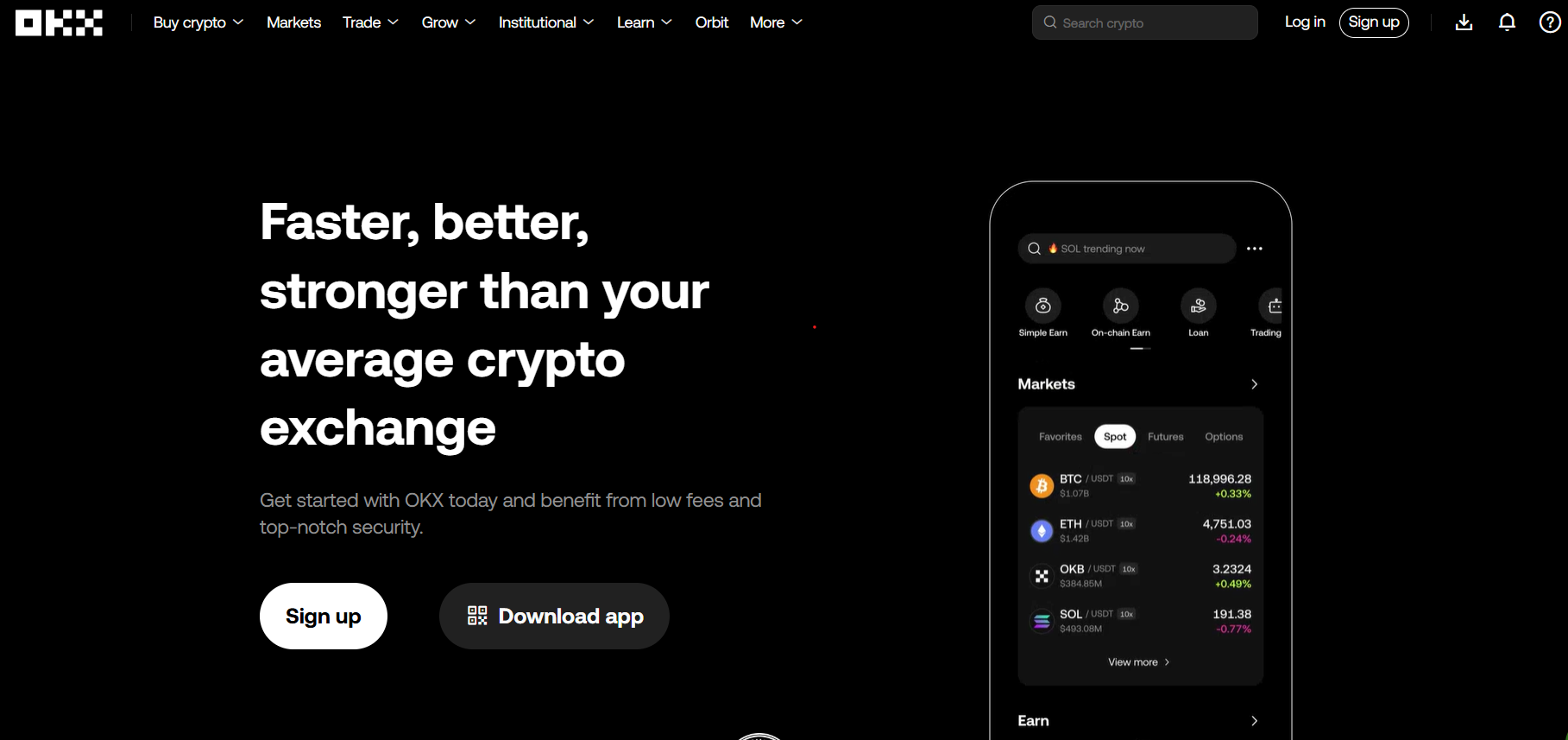
OKX combines a comprehensive centralized exchange with Web3 tools, making it a strong choice for experienced users who want both traditional exchange functionality and on-chain capabilities.
It is best suited for traders who actively use derivatives, AI automation tools, APIs, and self-custody wallets alongside centralized exchange services.
OKX offers spot trading, perpetual futures, options, trading bots, APIs, proof-of-reserves reporting, and an integrated Web3 wallet. The platform also supports advanced order types, making it suitable for traders who need greater flexibility than a basic exchange interface.
Before selecting OKX, verify product availability in your jurisdiction, understand the risks associated with leveraged trading, and review the platform's fee schedule and funding costs for your preferred products.
Takeaway: Choose OKX if you want an advanced trading platform that combines centralized exchange features with Web3 tools and automation.

Bybit is designed for traders who primarily trade perpetual futures and other derivatives rather than simply buying and holding crypto.
It is best suited for experienced traders who want leveraged products, advanced charting, copy trading, and a platform built around active trading strategies.
The platform offers spot trading, perpetual contracts, options, copy trading, APIs, and institutional services in eligible markets. It also publishes information about its insurance fund, proof-of-reserves, and trading fee structure, helping users better understand execution costs and risk management.
Before choosing Bybit, confirm whether derivatives trading is available in your jurisdiction, understand leverage and liquidation risks, and review funding rates, withdrawal policies, and trading fees.
Takeaway: Choose Bybit if derivatives trading is your primary use case and you have the experience to manage leveraged positions responsibly.

Gemini is built for users who place a premium on regulation, custody, and governance over access to the widest range of crypto assets.
It is best suited for businesses, institutions, and long-term investors that require strong compliance standards, audited controls, and qualified custody services.
Gemini operates as a New York trust company and offers spot trading, custody services, institutional products, and APIs. The platform highlights its security certifications, proof-of-reserves initiatives, and compliance framework, making it attractive for organisations with strict governance requirements.
Before opening an account, compare ActiveTrader pricing with standard retail fees, review custody costs if applicable, and verify support for your preferred assets and jurisdiction.
Takeaway: Choose Gemini when regulatory oversight, institutional custody, and operational transparency matter more than access to every altcoin.
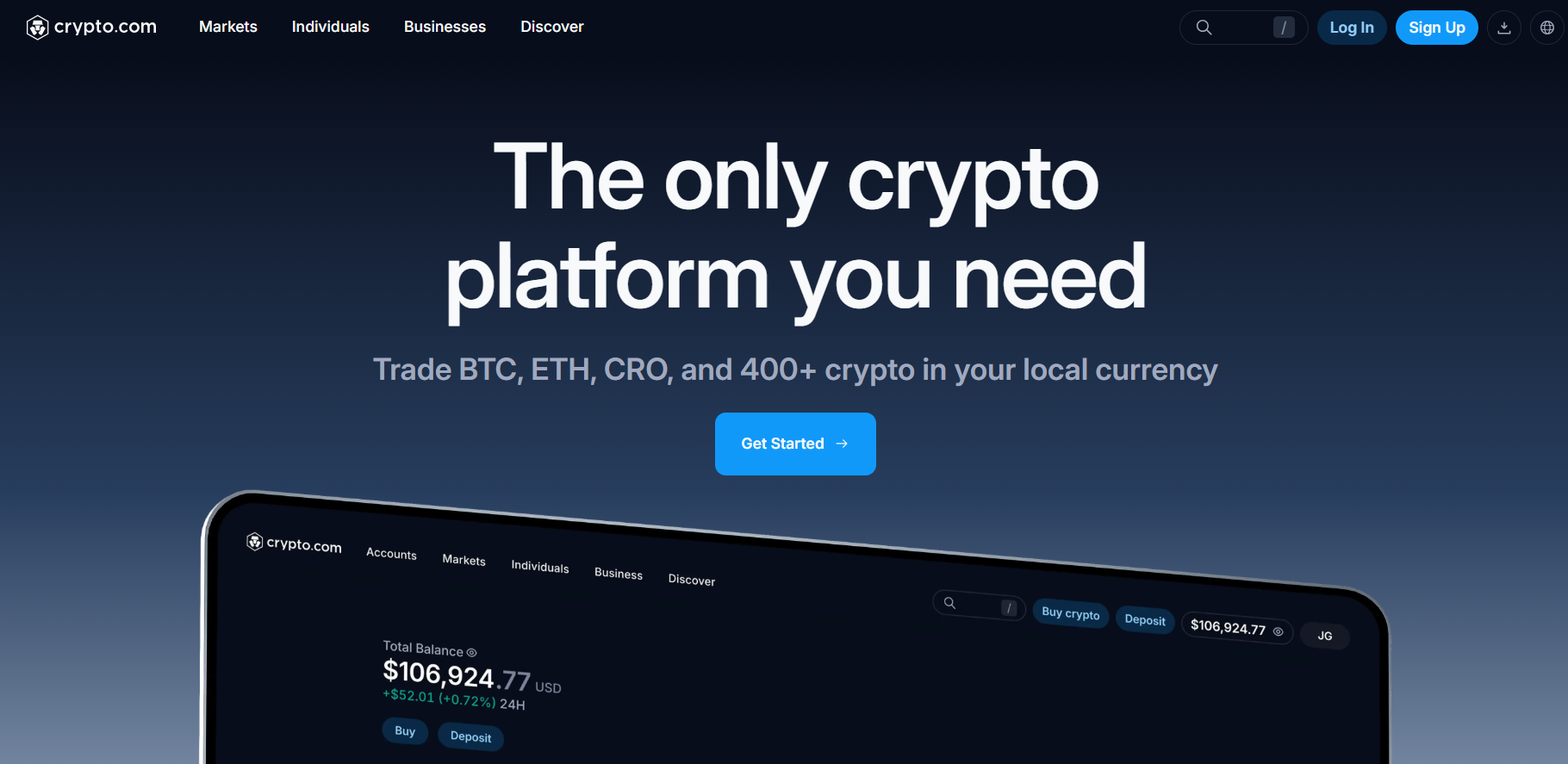
Crypto.com combines crypto trading with payments, cards, rewards, and mobile-first services, making it a good choice for users who want an all-in-one ecosystem.
It is best suited for retail users who regularly buy, spend, and manage crypto through a mobile app while still having access to a dedicated exchange for more advanced trading.
The platform offers spot trading, derivatives in eligible markets, staking, Visa cards, rewards programmes, APIs, and a separate Exchange platform with advanced order types. Users can move between consumer and trading products without leaving the broader Crypto.com ecosystem.
Before choosing Crypto.com, compare pricing between the mobile app and the Exchange, review withdrawal fees, and understand how card benefits and staking requirements affect your overall costs.
Takeaway: Choose Crypto.com if you want a broad crypto ecosystem that combines investing, payments, and everyday crypto usage in one platform.
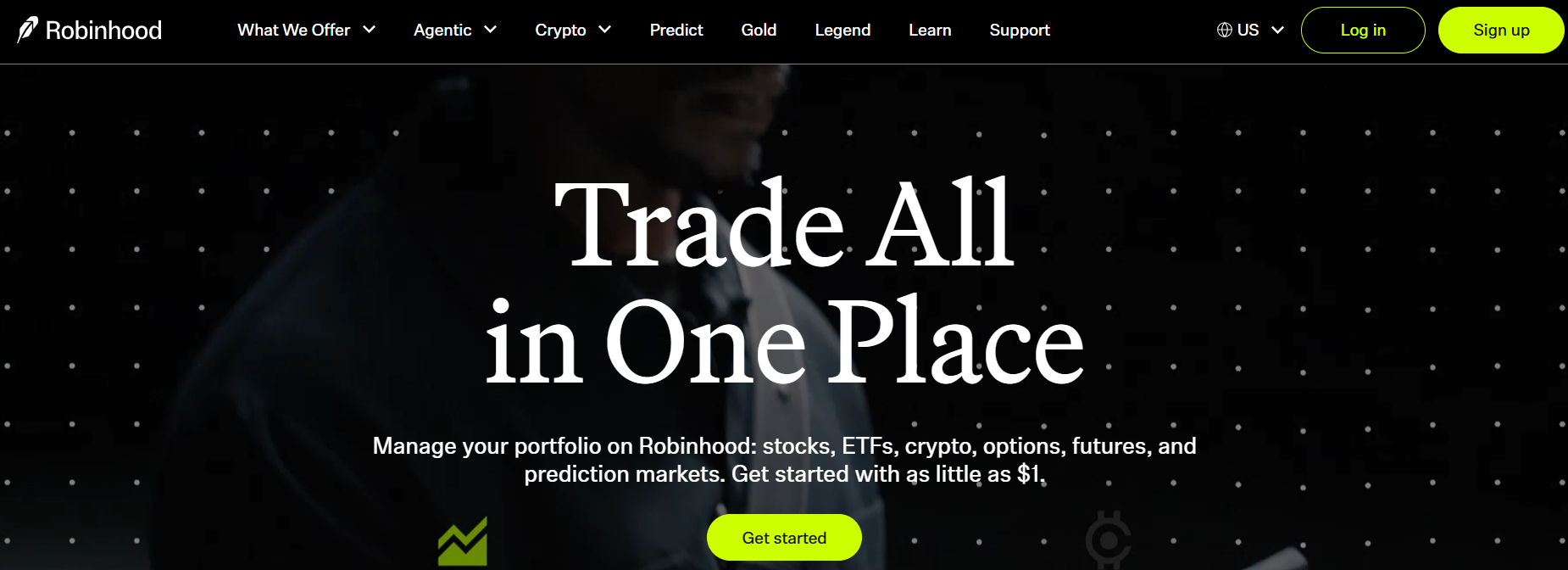
Robinhood is designed for users who want to manage stocks and cryptocurrencies through a single, familiar investment app.
It is best suited for beginner investors and existing Robinhood customers looking for a straightforward way to buy and hold major cryptocurrencies alongside traditional investments.
The platform offers commission-free stock trading, crypto investing, options, retirement accounts, and a streamlined mobile experience. Its simple interface makes it accessible to new investors, while smart exchange routing and other features continue to evolve.
Before using Robinhood for crypto, review its routing model, available cryptocurrencies, spreads, withdrawal features, and any limitations compared with dedicated crypto exchanges.
Takeaway: Choose Robinhood if you want a simple investing experience that combines stocks and crypto in one platform without the complexity of professional trading interfaces.
These platforms are worth evaluating if your requirements are more specific than those addressed by the larger exchanges above. They can be strong choices for particular markets or trading styles but generally require more due diligence around regulation, liquidity, and product availability.
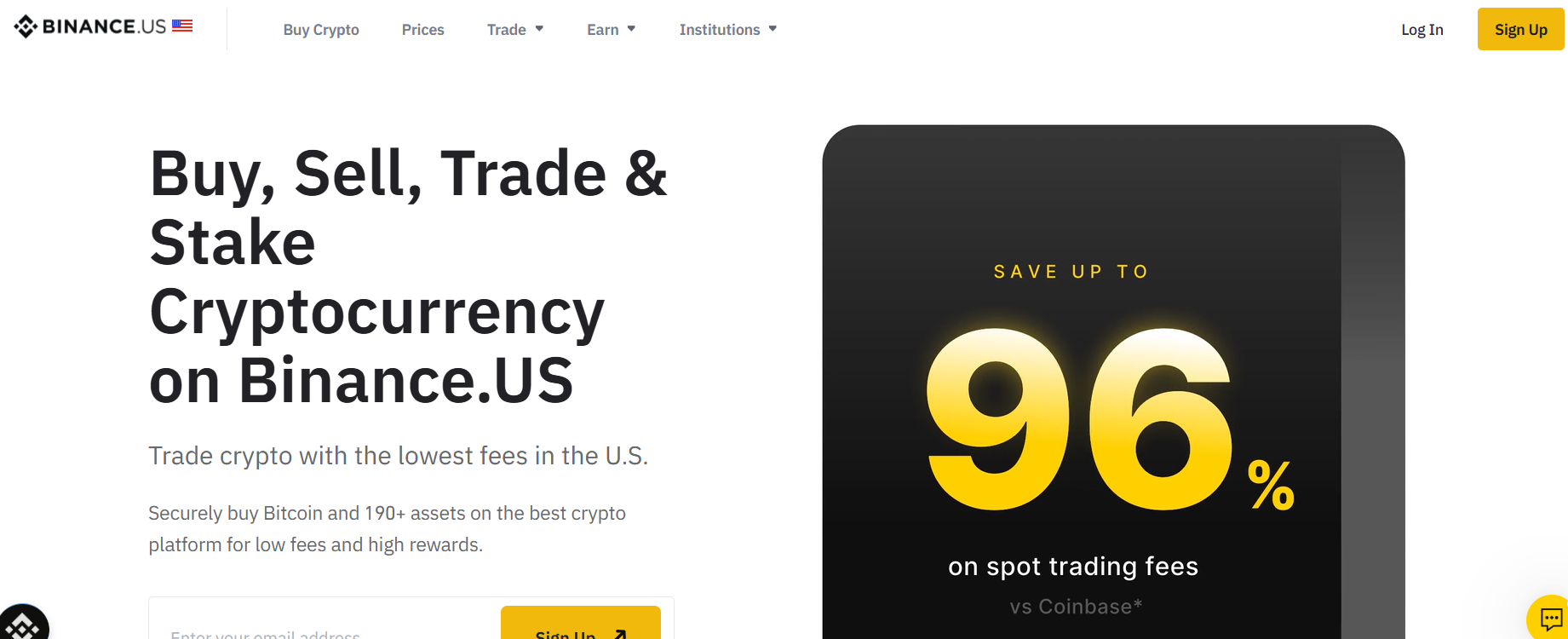
Binance.US is designed for U.S. customers who want a familiar trading experience while remaining within the platform's U.S.-regulated offering.
It is best suited for traders looking for competitive spot trading fees, a straightforward interface, and access to major cryptocurrencies.
The platform offers spot trading, staking for eligible assets, and API access, although available products and USD services vary by state.
Before opening an account, verify whether USD deposits and withdrawals are supported in your location, review the available asset list, and compare liquidity with larger U.S. exchanges.
Takeaway: Choose Binance.US if you're a U.S.-based trader looking for competitive spot trading and a Binance-style interface, provided the platform supports your state.
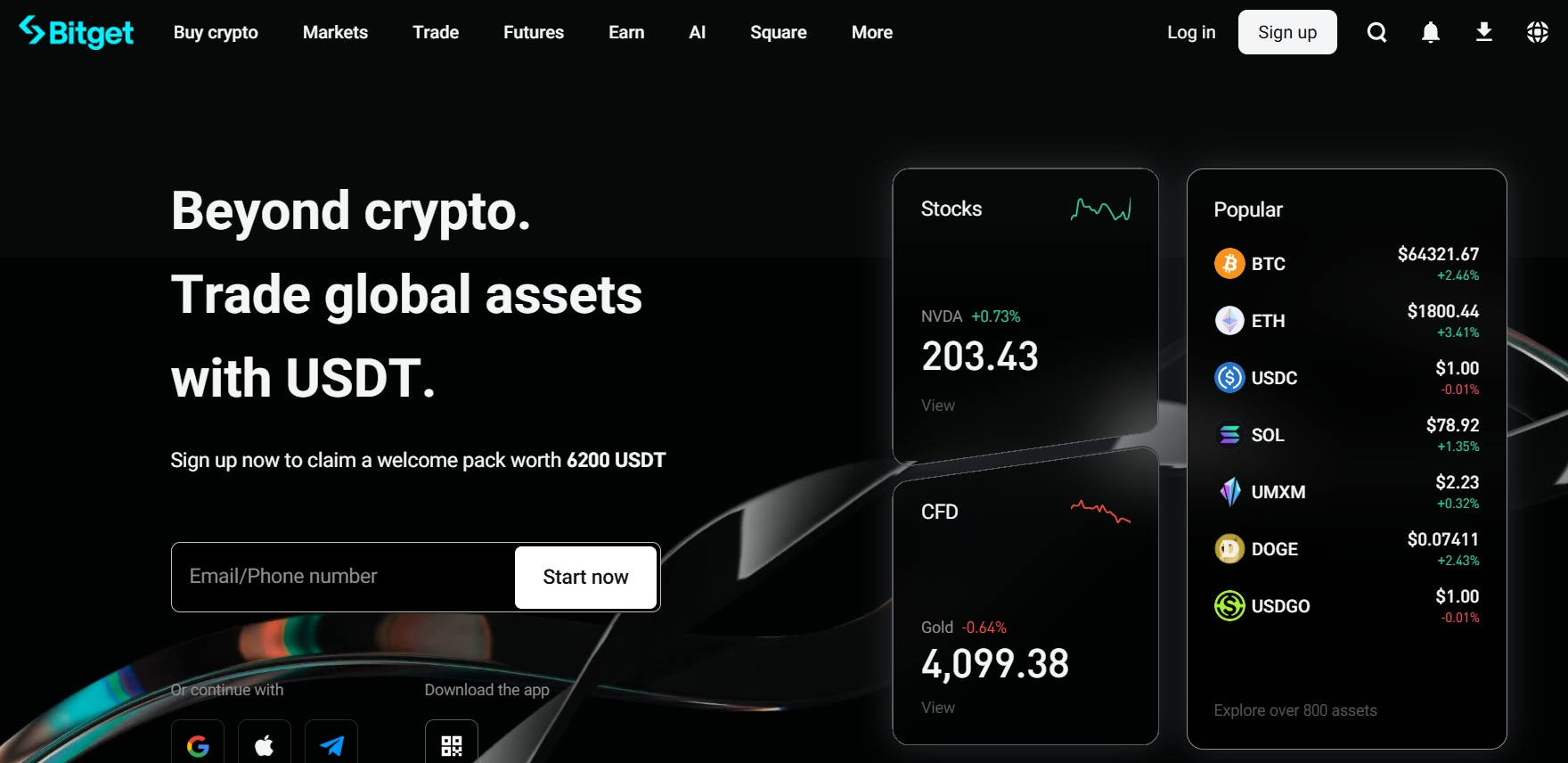
Bitget is aimed at traders who actively use futures, copy trading, and advanced trading tools.
It is best suited for experienced users who want access to derivatives, automated strategies, and a broad range of digital assets.
The platform supports spot trading, futures, copy trading, APIs, and institutional services. It also publishes proof-of-reserves information and maintains a protection fund to strengthen user confidence.
Before choosing Bitget, confirm regulatory availability in your jurisdiction, compare liquidity for the trading pairs you use most, and understand the risks associated with leveraged products.
Takeaway: Choose Bitget if copy trading, futures, and active trading features are more important than institutional-grade regulatory infrastructure.
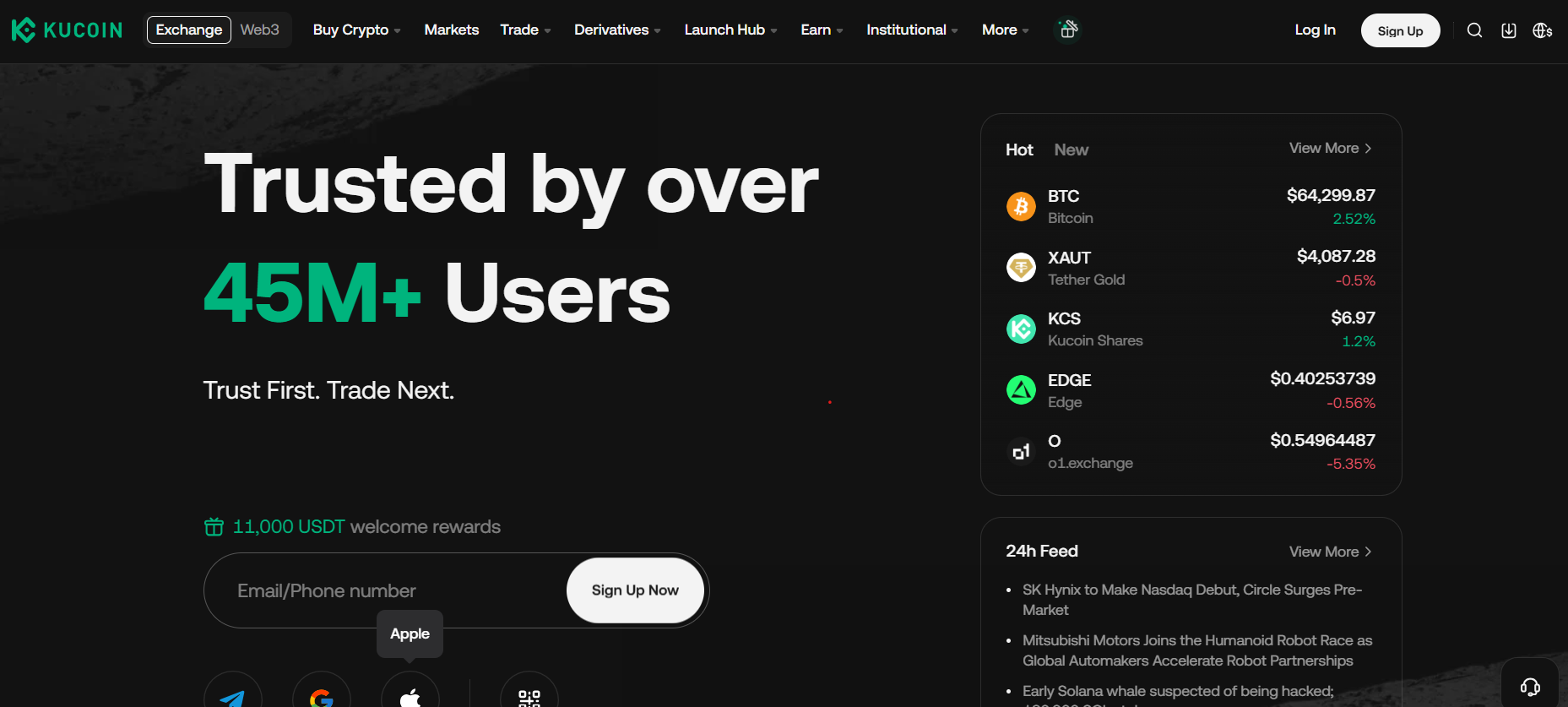
KuCoin is known for listing a wide range of cryptocurrencies, making it attractive to traders seeking exposure beyond the largest digital assets.
It is best suited for users who regularly trade emerging tokens and want access to a broad marketplace.
The platform offers spot trading, margin trading, futures, staking, lending, and APIs. It also publishes proof-of-reserves information and a transparent trading-fee schedule.
Before choosing KuCoin, review the regulatory position in your jurisdiction, compare withdrawal fees, and evaluate liquidity for smaller-cap assets rather than relying solely on headline trading fees.
Takeaway: Choose KuCoin if access to a wide range of cryptocurrencies is your primary priority and you're comfortable performing additional due diligence.
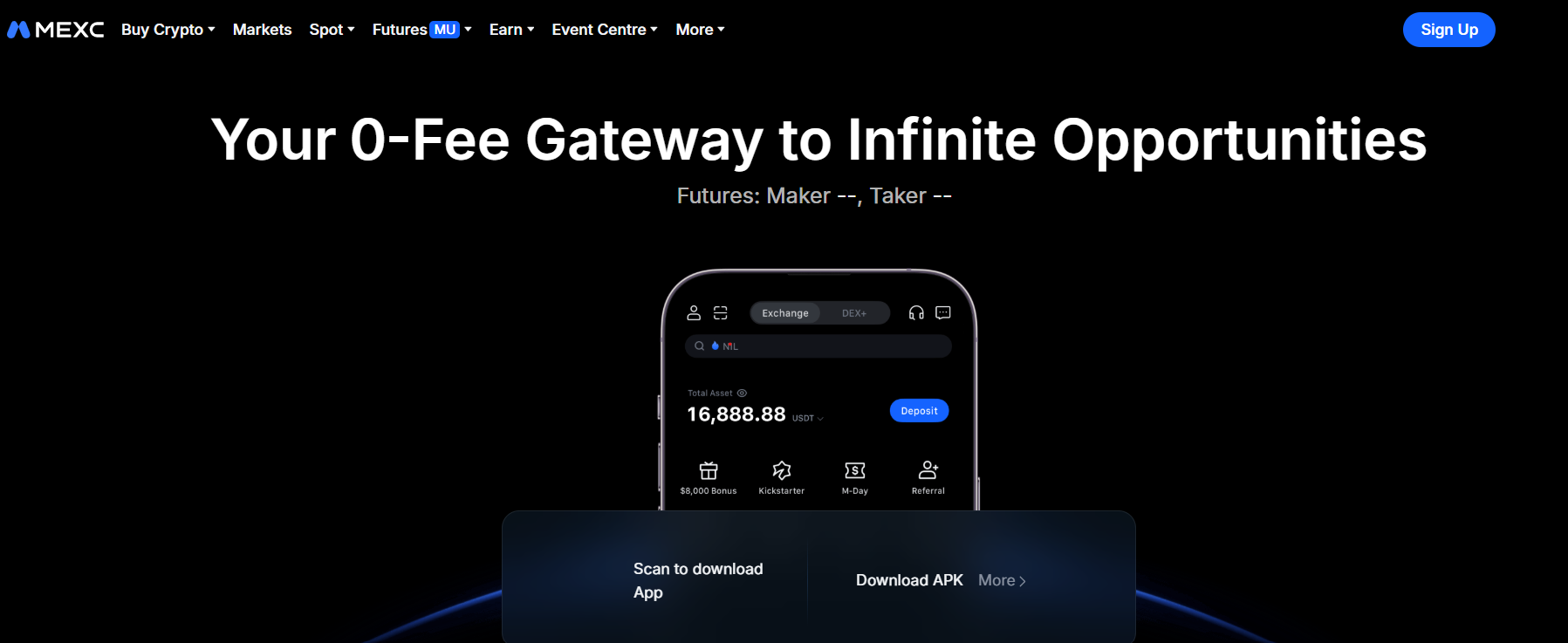
MEXC is popular among traders looking for newly listed cryptocurrencies and competitive trading fees.
It is best suited for experienced users who actively trade emerging assets and want early market access.
The platform supports spot trading, futures, ETFs, staking, and APIs while also publishing proof-of-reserves information and fee schedules for users.
Before opening an account, verify liquidity for your intended trading pairs, compare withdrawal costs, and review the regulatory status of the platform in your region.
Takeaway: Choose MEXC if your priority is accessing newly listed tokens and niche markets rather than trading only established cryptocurrencies.
The best crypto trading platform depends on what you're trying to achieve.
Retail investors may prioritise ease of use and regulatory protection, active traders often focus on liquidity and execution quality, while businesses need infrastructure that supports payments, custody, compliance, and operational workflows.
Rather than choosing the platform with the longest feature list, start by defining your asset requirements, jurisdiction, custody preferences, and trading needs. Then compare providers based on how well they support those priorities.
Taking the time to evaluate these factors, and testing the complete onboarding, funding, trading, and withdrawal process, will help you choose a platform that continues to meet your needs as your trading activity grows.


%20(1)%20(1).png)