
Choosing a stablecoin infrastructure platform is no longer just a technical decision. It affects how money moves through your business, how customers are onboarded, how compliance is managed, and how finance teams reconcile transactions after settlement.
The right platform should fit your payment workflow, not just support the most blockchains.
A marketplace paying sellers across multiple countries has very different requirements from a treasury team managing liquidity or a fintech launching embedded wallets. Some businesses need custody and governance. Others need global fiat payouts, virtual accounts, or stablecoin conversion.
This guide compares the leading stablecoin infrastructure platforms for enterprise use, including Fuze Finance, Circle, Fireblocks, Bridge, BVNK, Paxos, Zero Hash, and Cobo. Rather than ranking providers by feature count alone, we evaluate where each platform fits best, the trade-offs to consider, and the type of business it serves.
The best stablecoin infrastructure platform is not simply the provider with the most supported chains. Enterprise buyers should start with the money movement workflow they need to launch in the next 90 days.
A PSP adding stablecoin merchant settlement has different needs from a bank launching wallets. A remittance company needs different rails from a treasury team rebalancing liquidity across regions.
Use these criteria to evaluate fit:
The workflow also matters. Buyers should define whether they need supplier payouts, remittances, PSP settlement, merchant acceptance, embedded wallets, payroll, treasury rebalancing, or account funding.
Compliance is equally important. Confirm who owns KYC, KYB, AML, sanctions screening, Travel Rule obligations, on-chain monitoring, jurisdiction restrictions, licensing, and reporting.
Finally, validate the operating layer. Look at fiat rails, custody segregation, role-based approvals, audit logs, ERP exports, webhook reliability, and production approval timelines.
Start with shortlisting platforms by the flow of funds you need to launch first. Then verify licensing, corridor availability, custody design, compliance evidence, and finance-ready reporting before signing.
Public documentation changes often. Buyers should confirm final asset, jurisdiction, pricing, entity, and SLA coverage during diligence.
The table below provides a quick comparison of the leading stablecoin infrastructure platforms. While it highlights the key differences at a glance, the detailed reviews that follow explain where each platform excels, its limitations, and the types of businesses it's best suited for.

Fuze Finance is the strongest choice for businesses that want a single platform for stablecoin payments, embedded wallets, compliance, treasury, and fiat settlement. Rather than stitching together multiple providers, businesses can manage the entire payment lifecycle through one regulated infrastructure layer.
The platform supports major stablecoins including USDC, USDT, PYUSD, and USDG, while providing access to 65 payment corridors and 40 fiat currencies through rails such as ACH, Fedwire, SEPA Instant, FPS, CHAPS, SWIFT, and local banking networks. It also includes treasury dashboards, real-time reconciliation, audit logs, and reporting tools that simplify finance operations after settlement.
For developers, Fuze offers production-ready APIs, webhooks, sandbox environments, and chain-agnostic routing, while compliance teams benefit from built-in KYC, AML, sanctions screening, Travel Rule support, and on-chain monitoring.
Unlike custody-only or issuer-focused providers, Fuze combines payments, wallets, compliance, fiat connectivity, and treasury operations into one platform, making it well suited for fintechs, payment service providers, remittance companies, marketplaces, and regulated financial institutions looking to launch stablecoin payments quickly.
Best for: Businesses looking for an end-to-end regulated stablecoin payment infrastructure rather than separate point solutions.

Bridge is best suited for engineering teams that want to abstract blockchain complexity behind simple APIs. It focuses on stablecoin orchestration, managed custodial wallets, and payment infrastructure, making it a strong choice for fintechs and SaaS companies building embedded payment experiences.
The platform supports major networks including Ethereum, Base, Solana, and Tron, with assets such as USDC, USDT, EURC, PYUSD, and USDB depending on the chain. Its orchestration APIs handle wallet management and transfers, allowing developers to integrate stablecoin functionality without managing blockchain infrastructure directly.
Bridge emphasizes developer experience with modern APIs, while production wallet functionality requires legal and compliance approval. Businesses should also verify regional availability, as custodial wallets are unavailable in several jurisdictions.
Unlike full payment infrastructure providers, Bridge focuses primarily on developer-friendly orchestration rather than treasury management or end-to-end payment operations.
Best for: Engineering-led fintechs and SaaS companies looking for simple APIs to build stablecoin-powered products.
Circle is the leading choice for organizations that have standardized on USDC and EURC. As the issuer of USDC, it provides direct access to minting, redemption, custody, wallets, and payment infrastructure built around its own stablecoins.
Circle supports institutional treasury workflows through Circle Mint and the Circle Payments Network (CPN), enabling regulated businesses to move funds globally using USDC. Its platform also includes wallet services, compliance tooling, interoperability features, and direct banking connectivity.
Because Circle controls the underlying stablecoin infrastructure, it offers strong transparency and deep integration for businesses operating primarily with USDC. However, it is less flexible for companies that require broad multi-stablecoin support.
Best for: Enterprises that want issuer-direct access to USDC for treasury, payments, and institutional settlement.

Fireblocks is designed for institutions where wallet security, governance, and treasury controls are the highest priorities. Rather than acting as a payment processor, it provides secure infrastructure for managing digital assets through MPC technology and policy-driven transaction approvals.
The platform supports thousands of digital assets while offering institutional features such as vaults, approval workflows, whitelisting, audit trails, and granular role-based permissions. It is widely used by banks, exchanges, asset managers, and trading firms.
Fireblocks excels as a custody and treasury layer but generally requires additional payment infrastructure for fiat settlement, payment orchestration, and compliance workflows.
Best for: Financial institutions that prioritize secure custody, treasury governance, and digital asset operations.

BVNK combines stablecoin payments with traditional banking rails, making it a strong option for payment service providers, marketplaces, and international businesses managing both fiat and digital assets.
The platform supports stablecoin accounts, embedded wallets, OTC trading, and payment methods including SWIFT, ACH, Fedwire, SEPA, Faster Payments, RTP, and FedNow. Businesses can move seamlessly between fiat and stablecoins while accessing named virtual accounts and treasury tools.
BVNK provides managed compliance, custody, and payment execution, allowing businesses to launch stablecoin payment products without building every infrastructure component internally.
Best for: PSPs and global businesses looking to combine traditional payment rails with stablecoin settlement.
Paxos specializes in regulated stablecoin issuance and enterprise blockchain infrastructure. Its platform supports payments, conversion, and settlement using regulated assets including PYUSD, USDP, USDG, and USDC.
The company emphasizes regulatory oversight, reserve transparency, and institutional-grade infrastructure, making it attractive for enterprises that prioritize compliance and issuer-backed stablecoins.
While Paxos provides strong regulated infrastructure, it is less focused on complete payment orchestration, embedded wallets, and treasury workflows than broader payment platforms.
Best for: Enterprises needing regulated stablecoin issuance and conversion infrastructure.

Zero Hash provides API-driven infrastructure for businesses embedding crypto trading, stablecoin payments, custody, and blockchain connectivity into their products.
Its platform supports fiat on/off ramps, stablecoin payouts, custody, compliance, transaction monitoring, and settlement across multiple blockchain networks. With one API, businesses can integrate funding, payouts, remittances, and digital asset functionality into existing financial products.
Zero Hash is particularly attractive for fintechs, brokerages, and marketplaces that want embedded digital asset capabilities while outsourcing much of the regulatory and operational complexity.
Best for: Fintechs and financial platforms embedding crypto trading and stablecoin payments through APIs.
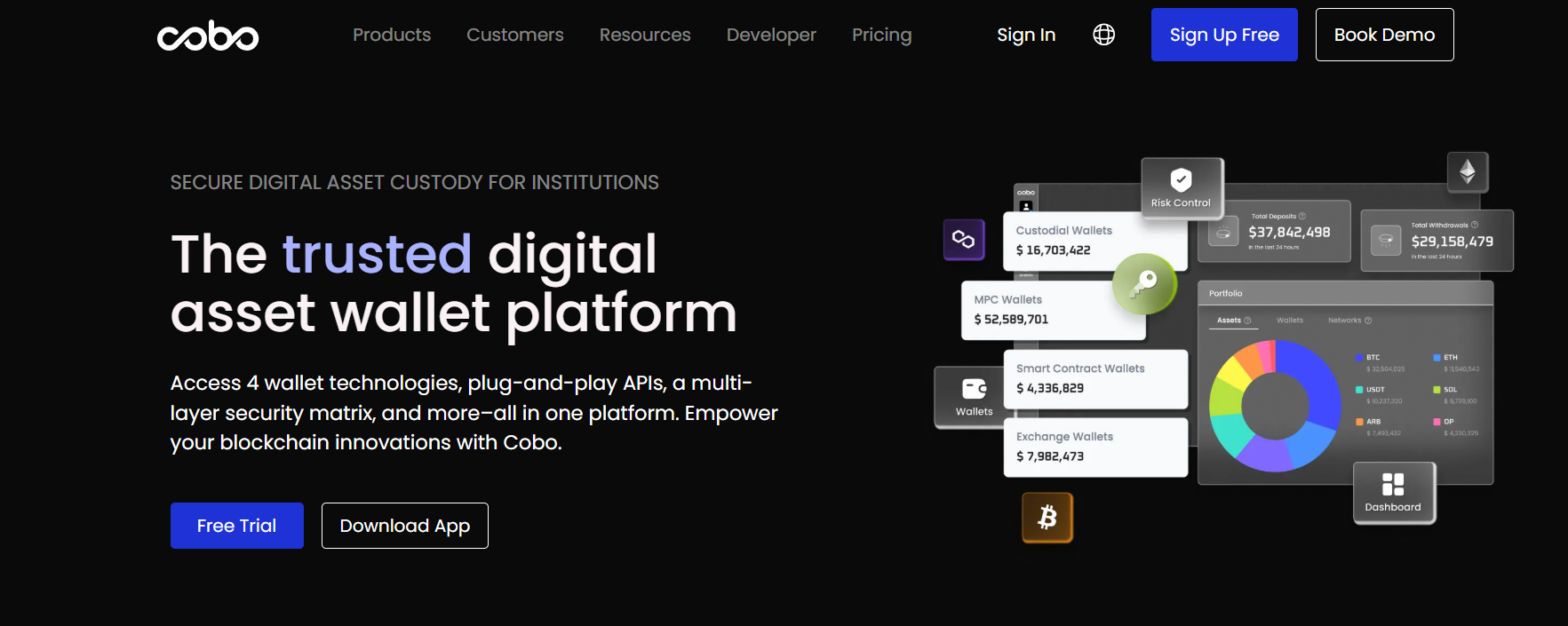
Cobo focuses on Wallet-as-a-Service rather than end-to-end payment infrastructure. It offers custodial, MPC, smart contract, and exchange wallet solutions that help businesses manage digital assets across thousands of tokens and dozens of blockchain networks.
The platform includes enterprise features such as automated token sweeping, gas management, policy engines, approval workflows, AML screening, and integrations with compliance providers like Chainalysis and Elliptic.
While Cobo is excellent for wallet operations, businesses still need separate providers for fiat settlement, payment orchestration, and broader treasury workflows.
Best for: Exchanges, custodians, and enterprises that need scalable wallet infrastructure and digital asset management.
The right platform depends less on the number of supported blockchains and more on the payment workflow you're trying to build. Before comparing providers, define how money will move through your business, whether that's supplier payments, cross-border settlement, embedded wallets, treasury operations, or marketplace payouts. The best provider is the one that fits those operational requirements while meeting your compliance and reporting needs.
Each platform has a different strength. Fuze Finance provides an end-to-end regulated infrastructure for businesses that want payments, wallets, fiat rails, treasury, and compliance in one solution. Circle is the natural choice for organizations standardizing on USDC, while Fireblocks and Cobo focus primarily on custody and wallet infrastructure. Bridge is built around developer-friendly orchestration, BVNK combines traditional payment rails with stablecoins, Paxos specializes in regulated issuance, and Zero Hash excels at embedded crypto infrastructure.
Before making a final decision, validate more than just API documentation. Confirm licensing, supported jurisdictions, custody structure, stablecoin availability, fiat corridors, reporting capabilities, reconciliation workflows, uptime commitments, pricing, and production support. Running a proof of concept with your own payment flow is often the fastest way to identify operational gaps before launch.
Choosing a stablecoin infrastructure platform is ultimately a business decision, not a blockchain decision. The right provider should support your payment workflows, compliance requirements, treasury operations, and reporting needs while fitting the markets and customers you serve.
For businesses looking to launch regulated stablecoin payments without stitching together multiple vendors, Fuze Finance brings payments, embedded wallets, fiat rails, compliance, treasury controls, and reconciliation into a single infrastructure platform. Whether you're building cross-border payment products, marketplace payouts, remittance services, or enterprise treasury workflows, it provides the operational foundation to move from pilot to production.


%20(1)%20(1).png)