
The fast pace of growth of digital payment systems has unlocked unprecedented convenience and speed for consumers and businesses alike. With this growth, however, comes an equally significant rise in sophisticated fraud attempts and cybersecurity threats. In such an environment, artificial intelligence (AI) has emerged as a transformative force, enhancing payment security and fortifying the financial ecosystem against evolving threats.
In this blog, we dive into how AI technologies are changing the game of payment security by detecting fraud, preventing breaches, and ensuring trust in financial transactions.
The financial industry faces significant challenges as digital payments grow globally:
AI offers a solution by providing automated, intelligent tools to identify and neutralize security threats in milliseconds, before they can cause harm.
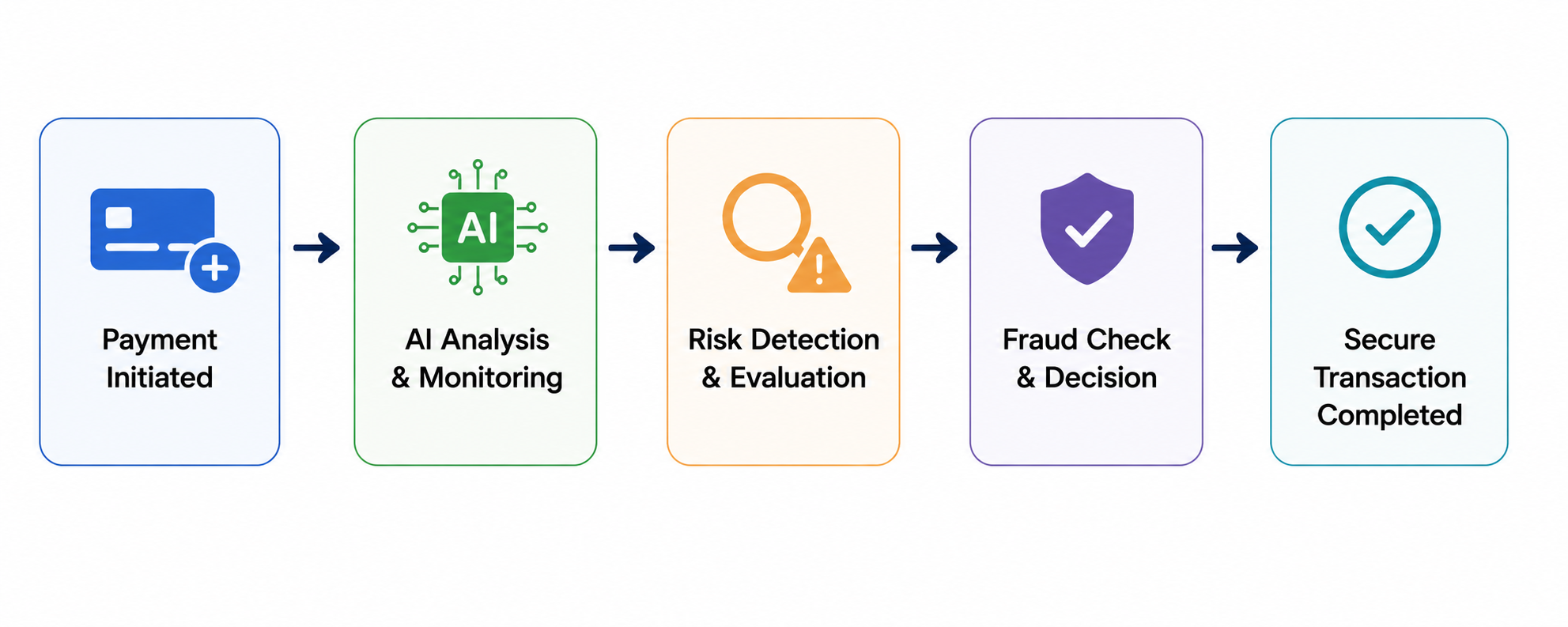
AI applies machine learning, deep learning, and advanced analytics in security at each stage of payment processing. Many financial institutions partner with providers offering AI development services to build custom fraud detection models, intelligent risk scoring systems, and real-time payment monitoring solutions tailored to their security requirements.
The AI-based system scans an enormous amount of transactional data in real-time for anomaly patterns indicating possible fraud. For instance:
Behavioral Analysis: AI systems monitor the typical user behaviors, such as spending patterns, device usage, and transaction locations. An unusual activity, such as a sudden high-value purchase from an unknown foreign location, raises an immediate alert.
Pattern Recognition: Machine learning models detect patterns that relate to fraudulent activities, such as repeated login failures or multiple transactions in rapid succession across several accounts.
It gives a risk score to each transaction by checking geolocation, device fingerprinting, and historical payment data. A high-risk score may raise a flag on the transaction for further verification or complete blocking to allow legitimate transactions to flow uninterruptedly.
By analyzing historical data, AI predicts potential fraud scenarios and preemptively strengthens defenses. For instance, AI might detect a surge in phishing attacks targeting specific payment gateways and enable protective measures before these attacks escalate.
Unlike traditional rule-based systems, AI can learn and adapt to new forms of fraud. Neural networks and deep learning models process unstructured data, such as text from phishing emails or social engineering attempts, to identify threats that might bypass conventional systems while also helping businesses track expiry dates more efficiently.
AI can look into voluminous data in real time to minimize false positives but highlight actual threats, leading to accuracy that also ensures losses to the bottom line as well as enhancing consumer confidence.
By automating fraud detection, businesses reduce the usage of manual reviews, hence availing free resources to operate in faster transaction processing manners.
When combined with secure web development, AI-powered payment systems deliver both high performance and stronger protection against cyber threats.
AI minimizes inappropriate declines and ensures a hassle-free experience for customers, hence boosting consumer loyalty and trust.
AI technologies ensure that organizations meet high demands like PCI DSS, GDPR, and AML by identifying suspicious activities and generating compliance reports.
AI-powered customer support is becoming an essential part of modern payment security. Businesses are increasingly investing in AI chatbot development services to automate customer queries, assist with identity verification, provide instant support, and enhance the overall security of digital payment systems.
At Fuze, we acknowledge that securing digital payments is the ultimate responsibility in today’s financial world. Our solutions are developed to empower financial institutions and companies with advanced fraud prevention tools and transaction security.
As financial institutions modernize their technology infrastructure, professionals can also explore a DevOps Course to build skills in automation, cloud infrastructure, and secure software deployment.
Artificial intelligence is revolutionizing payment security with robust, real-time solutions to counter fraud and ensure transactions are safe. It is no longer an option but a strategic imperative for banks, financial institutions, and businesses to embrace AI-driven payment platforms.
At Fuze, we are committed to staying at the forefront of this innovation, providing secure and seamless payment solutions. As the payment landscape continues to evolve, our tools empower organizations to navigate risks confidently and capitalize on opportunities in the digital economy.
Disclaimer: Virtual assets carry significant risks, including high volatility and potential loss of your entire investment. They are not backed by governmental protections, and recourse may be limited in case of loss. Always assess your risk tolerance, fully understand the risks, and seek independent financial advice if needed before investing.


%20(1)%20(1).png)